
Borderline Personality Disorder (BPD) and bipolar disorder are two distinct yet often confused mental health conditions due to overlapping symptoms like mood swings and impulsivity. BPD, a personality disorder, is marked by unstable relationships, intense fear of abandonment, and rapidly shifting emotions often triggered by interpersonal issues. In contrast, bipolar disorder is a mood disorder characterized by prolonged episodes of mania or depression, often arising without clear external causes and rooted in biological factors. While both conditions can include impulsivity and relationship challenges, bipolar symptoms follow more defined and sustained patterns, whereas BPD mood shifts are brief and reactive. Effective diagnosis and treatment, especially in cases involving substance abuse (dual diagnosis), require professional, integrated care. Ritual Recovery in Asheville, NC, offers comprehensive outpatient programs tailored to individuals dealing with both addiction and mental health conditions, incorporating holistic therapies to promote long-term recovery and well-being.
Borderline Personality Disorder vs Bipolar Disorder: Key Differences Explained
Borderline Personality Disorder (BPD) and bipolar disorder are two distinct mental health conditions that are frequently confused or misdiagnosed. While both involve significant mood fluctuations and emotional challenges, they differ substantially in their causes, symptoms, and treatment approaches. It can be difficult to know how to spot the difference between borderline personality disorder vs bipolar disorder, and therefore get help.
BPD is a personality disorder characterized by unstable relationships, intense fear of abandonment, and rapid shifts in self-image and emotions. Bipolar disorder, on the other hand, is a mood disorder marked by distinct episodes of mania or hypomania alternating with periods of depression. The confusion between these conditions often stems from their shared features like mood instability and impulsive behaviors.
Both disorders are serious mental health conditions that can significantly impact daily functioning and often co-occur with substance use disorders. When someone struggles with both a mental health condition and addiction, this is known as a dual diagnosis. At Ritual Recovery in Asheville, NC, we specialize in treating dual diagnosis cases and understand the complex relationship between mental health disorders like BPD and bipolar disorder and substance abuse.
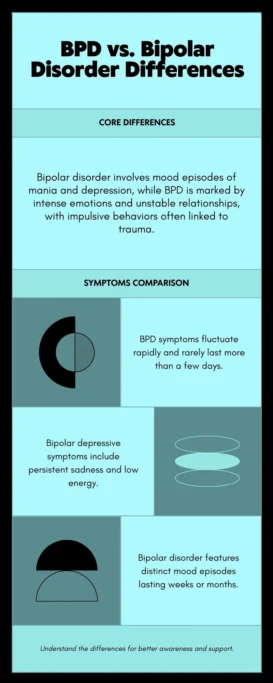
Core Differences Between Borderline Personality Disorder vs Bipolar Disorder
The fundamental distinctions between Borderline Personality Disorder vs Bipolar Disorder lie in their mood episodes, triggers, and duration patterns.
Mood Episodes and Duration
Bipolar Disorder
Bipolar disorder features distinct mood episodes that can last weeks or months. During manic episodes, individuals experience symptoms including:1
- Elevated mood
- Increased energy
- Grandiose thinking
- Psychosis
- Racing thoughts
Depressive episodes of bipolar disorder, on the other hand, bring persistent sadness, hopelessness, and low energy. These episodes are typically sustained for weeks or months, with depressive episodes potentially lasting 8 months if left untreated.2
Borderline Personality Disorder
Borderline personality disorder (BPD) is another mental illness that can cause significant disruptions in a person’s life. It is characterized by difficult and intense emotions, unstable self-image and relationships, and impulsive behaviors. People with BPD may also experience periods of intense anger or depression.
Unlike bipolar disorder, which has distinct episodes of mania and depression, symptoms of BPD can fluctuate rapidly and may overlap at times. This makes it challenging to diagnose and treat.3 The good news is that with BPD, rarely do these intense emotions sustain for more than a few days. But, it can still impact a person’s day-to-day life and relationships.
Triggers and Causes
Bipolar mood episodes often occur without clear external triggers and may follow seasonal patterns or stress cycles. The condition has strong genetic components and involves neurochemical imbalances that can be managed with mood-stabilizing medications.4
BPD symptoms are heavily influenced by interpersonal relationships and environmental factors. Fear of abandonment, relationship conflicts, or perceived rejection frequently trigger intense emotional responses. The condition often develops from a combination of genetic predisposition and traumatic childhood experiences.5
How are BPD and Bipolar the Same? Symptom Overlap and Distinctions
While BPD and bipolar disorder share some surface-level similarities, the underlying nature of these symptoms differs significantly.
Mood Swings
Both conditions involve mood instability, but the patterns are distinct. Bipolar mood swings represent discrete episodes with clear beginnings and ends. A person might experience weeks of depression followed by a manic episode lasting several days or weeks.
BPD mood swings are reactive and situational. Someone with BPD might wake up feeling optimistic, become devastated by a perceived slight from a friend, feel angry about the situation, then experience relief when the friend calls to clarify the misunderstanding—all within a few hours.
Impulsivity
Impulsive behaviors occur in both conditions but manifest differently. Bipolar impulsivity typically occurs during manic or hypomanic episodes and might include excessive spending, risky sexual behavior, or grandiose business ventures. These behaviors are often part of the elevated mood and inflated self-esteem characteristic of mania.
BPD impulsivity is more consistently present and often serves as a coping mechanism for intense emotional pain. This might include self-harm, substance abuse, binge eating, or impulsive relationship decisions, typically triggered by fear of abandonment or interpersonal stress.
Relationship Patterns
Both disorders can strain relationships, but for different reasons. Bipolar disorder relationship difficulties often stem from the unpredictability of mood episodes and their impact on reliability and communication.
BPD profoundly affects relationship patterns through intense fear of abandonment, idealization and devaluation cycles, and chronic feelings of emptiness. Relationships tend to be tumultuous, with individuals alternating between viewing others as perfect and terrible.
Getting Professional Help
Both BPD and bipolar disorder require professional diagnosis and treatment from qualified mental health providers. These conditions can significantly impact quality of life and often contribute to substance abuse as individuals attempt to self-medicate their symptoms. Dual diagnosis treatment programs understand the complex interaction between mental health conditions and addiction. They provide integrated care addressing both issues simultaneously, which research shows is more effective than treating them separately.
If you’re struggling with symptoms of BPD, bipolar disorder, or substance abuse, seeking help from a specialized dual-diagnosis program is crucial. At Ritual Recovery’s outpatient addiction treatment center in Asheville, NC, our experienced team provides comprehensive mental health and addiction treatment tailored to each individual’s unique needs.
In addition to providing specialized treatment for co-occurring disorders, we also prioritize holistic healing approaches such as mindfulness practices, yoga, and nutrition. We believe in treating the whole person – mind, body, and spirit – to promote long-term wellness and lasting recovery. Our goal is not just to help you overcome your addiction or mental health issues but to help you thrive in all areas of your life. To explore our programs, call us 24/7 at 828-519-1129.
FAQs
What is the primary difference between Borderline Personality Disorder (BPD) and Bipolar Disorder?
The main difference lies in the nature of each disorder. Borderline Personality Disorder (BPD) is a personality disorder characterized by intense emotional instability, difficulty in maintaining relationships, and an unstable self-image. Bipolar Disorder, on the other hand, is a mood disorder marked by extreme mood changes between manic (high energy and activity) and depressive (low energy and activity) episodes. While both involve mood changes, the triggers, patterns, and underlying causes differ significantly.
Can someone be diagnosed with both BPD and Bipolar Disorder?
Yes, it’s possible to be diagnosed with both disorders, as they are not mutually exclusive. Co-occurring diagnoses may present challenges in treatment planning, but understanding the symptoms of each condition can help tailor effective interventions. A thorough evaluation by a mental health professional is essential for accurate diagnosis and management.
How do mood changes differ between BPD and Bipolar Disorder?
Mood changes in Bipolar Disorder tend to last for days, weeks, or months and are usually divided into distinct episodes of mania, hypomania, or depression. In contrast, people with BPD often experience rapid, intense mood swings that can occur within hours and are frequently triggered by interpersonal conflicts or perceived rejection.
What are common symptoms of BPD?
Common symptoms of BPD include fear of abandonment, unstable relationships, impulsive or risky behavior, chronic feelings of emptiness, emotional volatility, and in some cases, self-harming behaviors. This disorder also often involves a distorted sense of self and extreme sensitivity to perceived rejection.
What are common symptoms of Bipolar Disorder?
Bipolar Disorder symptoms depend on the type of episode a person is experiencing. Manic episodes may include high energy, racing thoughts, impulsivity, and a decreased need for sleep. Depressive episodes are often marked by low energy, feelings of hopelessness, and difficulty concentrating. Some people also experience hypomanic episodes, which are less severe than full mania.
How are these disorders treated?
Treatment approaches differ for BPD and Bipolar Disorder but often involve a combination of therapy and medication. For BPD, therapies like Dialectical Behavior Therapy (DBT) and mindfulness-based interventions are highly effective. Bipolar Disorder may require mood-stabilizing medications, such as lithium, alongside therapies like Cognitive Behavioral Therapy (CBT). A mental health professional can recommend the best course of treatment based on individual needs.
Why is it important to differentiate between these two disorders?
Differentiating between BPD and Bipolar Disorder is crucial because they require distinct treatment approaches. Misdiagnosis can lead to ineffective treatment strategies, worsening symptoms, or delays in recovery. A proper diagnosis ensures the individual receives appropriate care tailored to their unique condition.
References
- Cleveland Clinic. (2021, September 14). Mania: What is it, causes, triggers, symptoms & treatment. Cleveland Clinic. https://my.clevelandclinic.org/health/diseases/21603-mania
- Harvard Health Publishing. (2019, March 13). Bipolar Disorder (Manic Depressive Illness or Manic Depression) – Harvard Health. Harvard Health; Harvard Health. https://www.health.harvard.edu/a_to_z/bipolar-disorder-manic-depressive-illness-or-manic-depression-a-to-z
- Cleveland Clinic. (2022, May 20). Borderline personality disorder (BPD): Symptoms, treatment, causes. Cleveland Clinic. https://my.clevelandclinic.org/health/diseases/9762-borderline-personality-disorder-bpd
- Lee, J. G., Woo, Y. S., Park, S. W., Seog, D.-H., Seo, M. K., & Bahk, W.-M. (2022). Neuromolecular etiology of bipolar disorder: Possible therapeutic targets of mood stabilizers. Clinical Psychopharmacology and Neuroscience, 20(2), 228–239. https://doi.org/10.9758/cpn.2022.20.2.228
- Bozzatello, P., Rocca, P., Baldassarri, L., Bosia, M., & Bellino, S. (2021). The Role of Trauma in Early Onset Borderline Personality Disorder: A Biopsychosocial Perspective. Frontiers in Psychiatry, 12(1). https://doi.org/10.3389/fpsyt.2021.721361